Western Sicily · Mozia & Marsala
From the Phoenician island of Mozia to the salt pans of Marsala
The Journey
Westward through light and memory: the island of Mozia, the salt pans of Marsala, and dinner served as the water turns to rose.
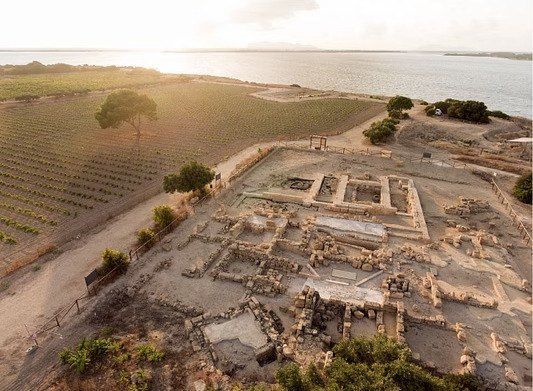
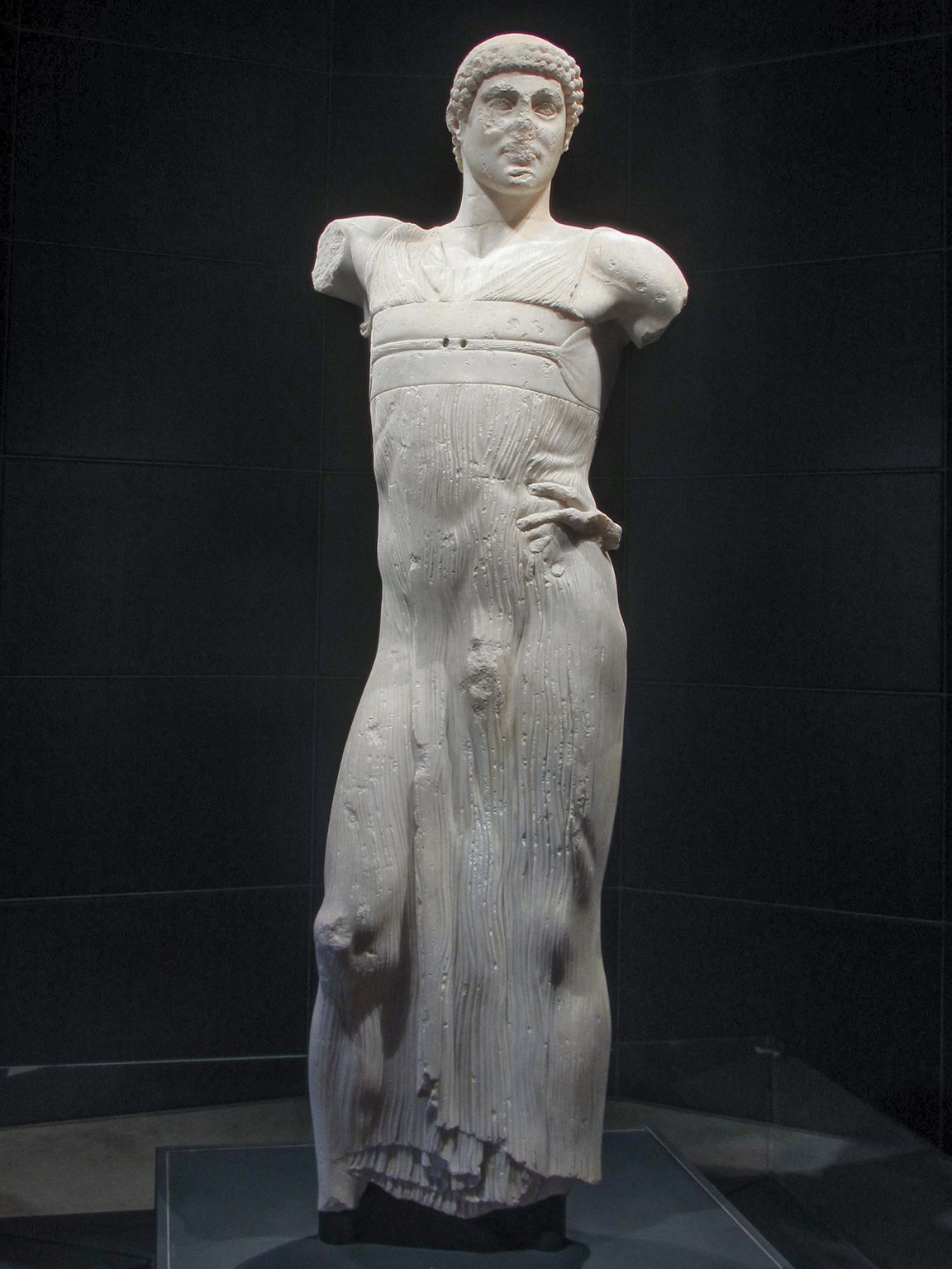
Leaving Palermo behind, the road runs west until the land dissolves into the Stagnone lagoon. A short crossing over water shallow enough to read the salt beneath reaches Mozia, the island the Phoenicians chose almost three thousand years ago. With your guide, the ruins are walked slowly, among wildflowers, until the stories of that seafaring people settle quietly into place.
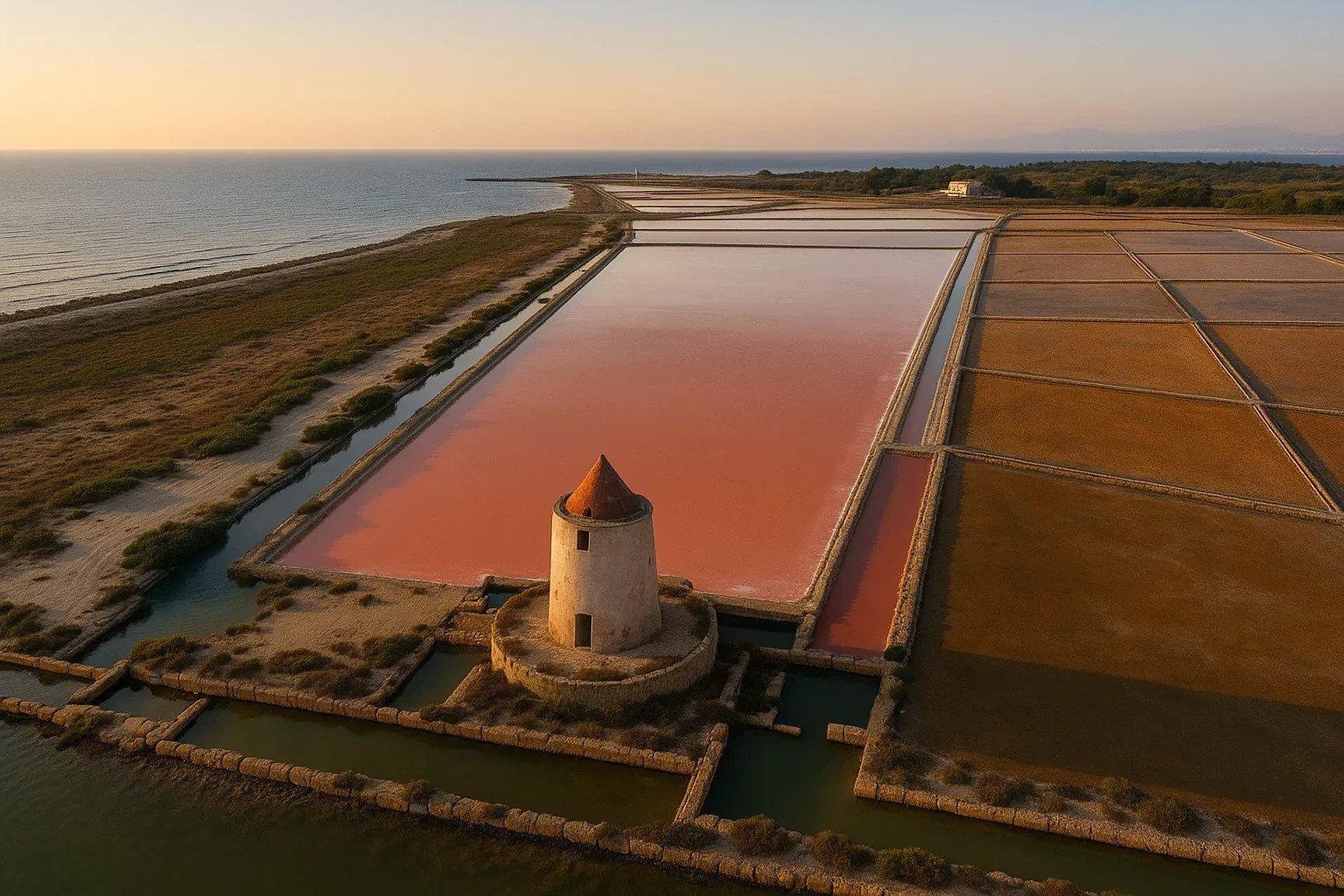
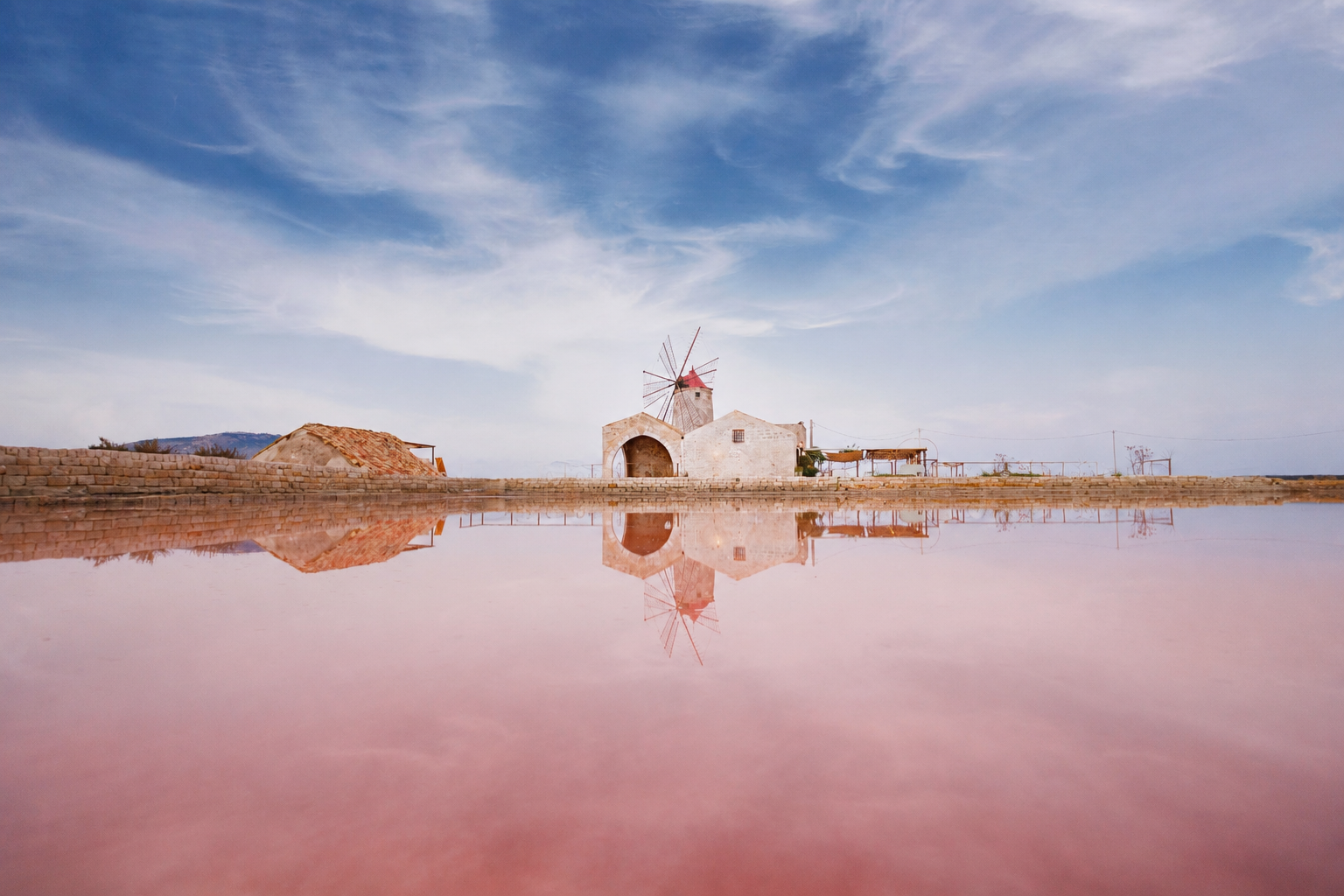
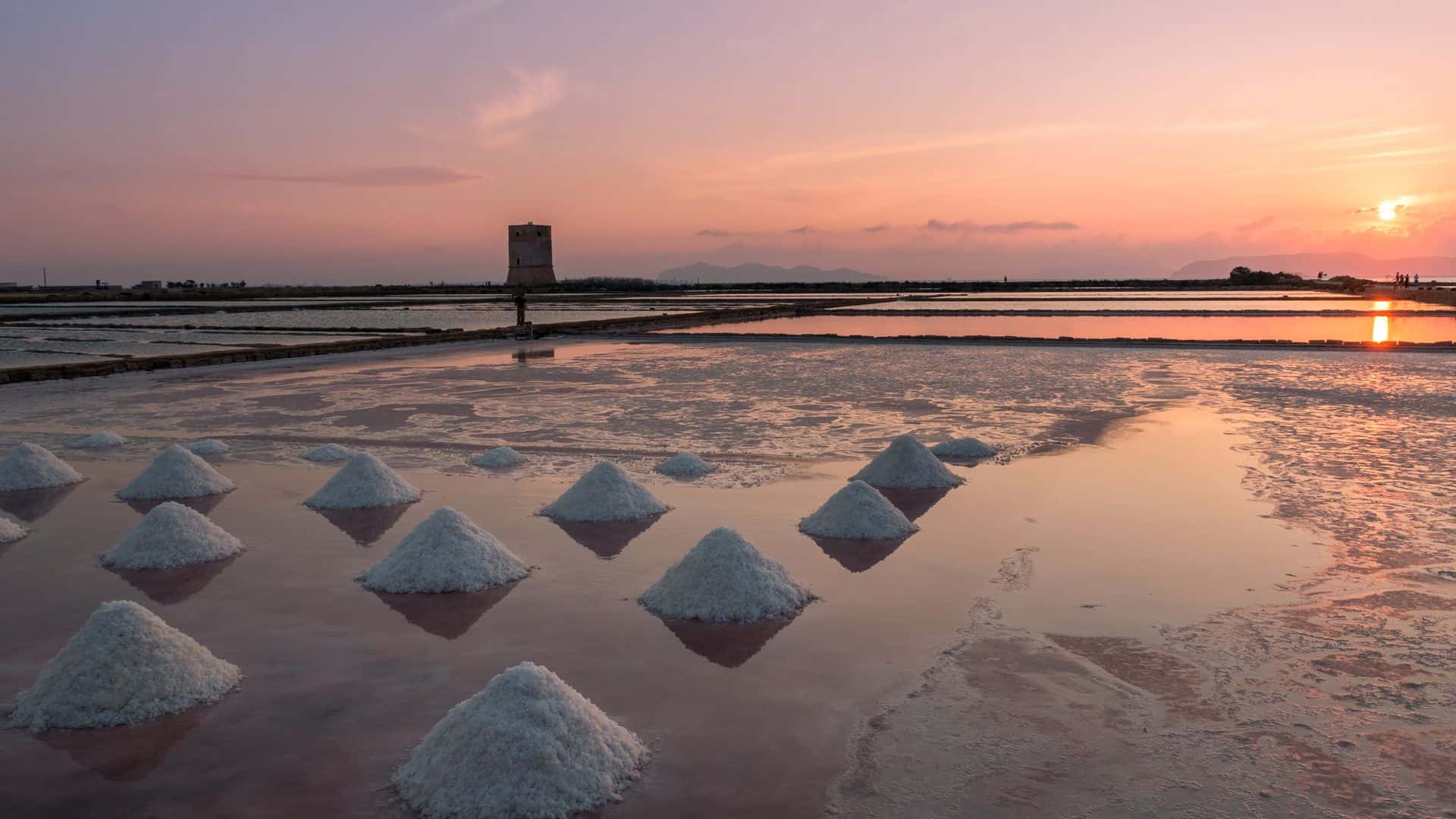
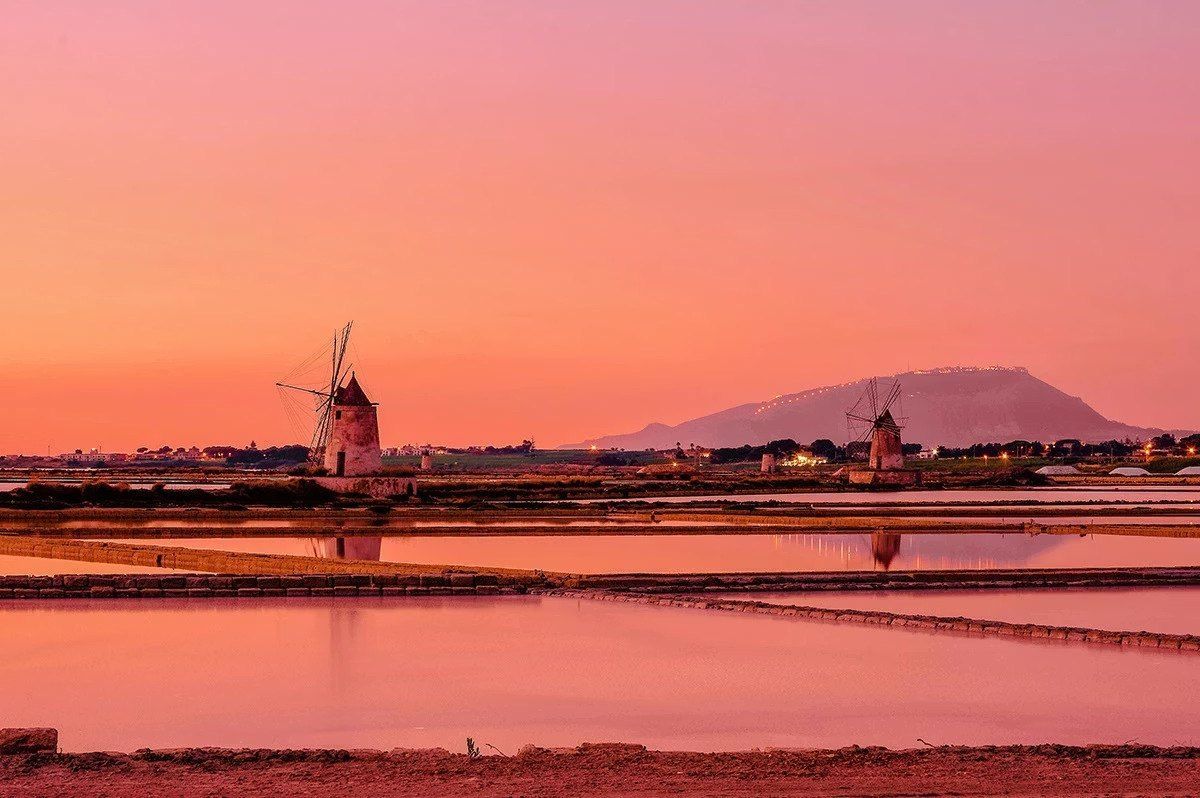
Back on the mainland, the salt pans of Marsala wait with their still waters holding the sky. As the light lowers, the windmills turn and the basins take on gold, copper and rose, the palette that has closed West-Sicilian days for centuries. Dinner is served overlooking the flats, with local wines and regional dishes, before the evening road home.
What Unfolds
Across the shallow Stagnone lagoon, towards the island.
Phoenician ruins walked slowly, among the wildflowers.
Still water taking on gold, copper and rose.
Windmills and wooden tools, still working the basins.
Local wines and western flavours, above the flats.
Revelia Stories
In the mind of Vincenzo Florio — Marsala, 10 May 1860, the eve of Garibaldi’s landing
I came alone to look at the salt pans, as is my habit when I have something that will not dissolve in my head.
The sun goes down and the shallow water turns pink, then red, then a colour that has no name and that I have seen only here. The basins lie one beside the other like the rooms of a house without a roof, and in each one the water is older and denser than in the one before.
The windmills turn slowly and carry the water from one basin to the next, and the wind does the rest, and the sun does the rest again. At the end, where there is nothing left to take away, the salt settles on the bottom, white, and the men gather it and heap it into pyramids and cover it with tiles so the rain will not take it back.
It takes months. No one can hurry it. The sea comes in poor and goes out rich — but only if you give it time.
The wine, for example. When I put my hands to it they all told me so, the gentlemen of Palermo: that trade belongs to the English, leave it alone. The English had arrived first, they had understood that this wine of Marsala withstands the voyage by sea and pleases London, and they had taken it all.
I bought the land between their two establishments. Right in the middle. Not out of spite: because that was the best place. They looked at me the way you look at a man who cannot swim and jumps in. Today my casks leave with theirs, from the same sea, and in England they no longer ask who the Sicilian is.
I have done the same, in the end, with everything else. I am the son of people who came to this land from outside, with a shop of spices and quinine and nothing more. There is no sorcery in it. I looked at this land the way you look at a salt pan: everything needed is here, and no one works it to the end.
Kingdoms change and salt pans do not. Tomorrow Garibaldi comes ashore here at Marsala with his thousand volunteers, and before the week is out the Bourbon flag that has flown over this town all my life will have come down. Everything will change and nothing will change. The vine will make grapes.
I am afraid of one thing only: that my sons, and my sons’ sons, will grow used to having and forget how to make. Because wealth is like these basins: if you stop letting the sea in, within a year it is all dry salt and cracks. Now it is nearly dark and the windmills have stopped. Then I shall go to the warehouse, because whatever happens there is bottling to be done.
Let us open the right door for you.
Design your travel